Other road users questions LGV theory test
This topic has 83 practice questions. Here are 10 of them with the right answer and why.
While driving at night, you see a pedestrian ahead. What does it mean if they're wearing reflective clothing and carrying a red light?
- You're approaching road workers
- You're approaching an organised walkRight answer
- You're approaching an incident hotspot
- You're approaching slow-moving vehicles
Pedestrians who are part of an organised walk using the road at night should wear bright or reflective clothing. The walker in front should display a white light, while the one at the back should display a red light. Be particularly careful, slow down and give the walkers plenty of room.
Which road users are more vulnerable at night in built-up areas?
- Drivers of black taxi cabs
- Drivers of double-deck vehicles
- CyclistsRight answer
- Ambulance drivers
Look out for cyclists who do not have lights on. Also be aware that pedestrians - especially those in dark clothing - may be difficult to see.
You're about to overtake a motorcyclist when they look around over their right shoulder. What's the most likely reason for them doing this?
- The rider intends to move to the rightRight answer
- Something has fallen from the machine
- The drive chain is slack
- The rear tyre is flat
Understanding other road users' behaviour can help you anticipate their next action. On this occasion it could prevent a serious incident. This type of assessment is part of the forward planning of a professional driver.
Why should you allow extra room for motorcyclists when they're riding through roadworks?
- There may be a reduced speed limit
- There may be temporary traffic lights
- They may swerve to avoid potholesRight answer
- The traffic may be in single file
Motorcyclists can ride through narrow gaps in traffic and generally do not take up as much room as a car. However, other factors, including the road surface, can affect their stability. Give them an extra safety margin whenever possible.
You're following a motorcyclist along a potholed road. How should you adjust your driving to take account of this situation?
- Give them extra roomRight answer
- Drive alongside them
- Try to pass them
- Stay close behind them
Good forward planning can help you keep other road users out of trouble. Information to help you do this is available if you look for it. Watch for clues: for example, a motorcyclist taking a 'lifesaver' look over their shoulder could be about to change direction.
Which vehicles are most at risk from spilt diesel fuel?
- MotorcyclesRight answer
- Empty tankers
- Towed vehicles
- Fire engines
Where the road surface has been made slippery (for example, by spilt diesel fuel), motorcyclists are particularly vulnerable to skidding.
You're driving in a town. What should you do when you see this sign on a stationary bus ahead?
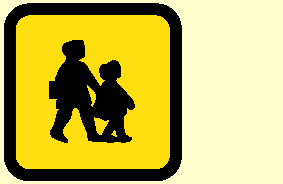
- Accelerate quickly
- Wait until it moves off
- Drive past slowlyRight answer
- Expect the driver will be looking after the children
Children getting off the bus will be hidden from your view, and they may not be able to see you. Even if they can see you, they may have poor judgement of danger. You should drive slowly as you pass the bus and be ready to stop.
What should you do when you're following a scooter on a poor road surface?
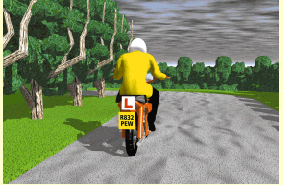
- Overtake without any delay
- Stay close behind until you can pass
- Stay well back and allow them roomRight answer
- Sound your horn as you get close
On a poor road surface, the rider may need to move out to avoid potholes. You may not get much warning. A look to the right or a 'lifesaver' check may warn you that they're about to move out. Stay well back and allow the rider plenty of room until you can pass safely.
At toucan crossings, pedestrians share the crossing with which other road users?
- Horse riders
- CyclistsRight answer
- Motorcyclists
- Trams
A toucan crossing is signal-controlled, but unlike a pelican crossing it does not have a flashing amber light in the sequence. Cyclists and pedestrians cross together, and cyclists are allowed to ride their bicycles over the crossing.
You're driving on a dual carriageway. What type of vehicle must use a flashing amber beacon on this road?
- An ambulance
- A fire engine
- A doctor's car on call
- A mobility scooterRight answer
Small battery-powered vehicles are often used by disabled people. On unrestricted dual carriageways, these vehicles must show a flashing amber light. Be very careful, as they have a maximum speed of 8 mph. You may see other slow-moving vehicles with amber flashing lights, such as agricultural vehicles.