Vehicle loading questions LGV theory test
This topic has 69 practice questions. Here are 10 of them with the right answer and why.
Which cargo needs to be transported at a controlled temperature?
- Perishable foodsRight answer
- Barrels of beer
- Cement
- Silage
Some foods need to be transported at controlled temperatures. Drivers will need to be trained in the use of refrigeration units and correct hygiene procedures.
How should you load a vehicle?
- Spread the load evenlyRight answer
- Load it towards the rear
- Load it towards the front
- Arrange the load to make it easy for unloading
It's your responsibility to make sure that the vehicle's load is spread evenly, to avoid overloading individual axles. Overloading carries severe penalties for the driver and operator.
You're going to drive an articulated lorry with an ISO container on the trailer. How should the container be secured to the trailer?
- The container must be secured by ropes
- The container must be secured using the locking leversRight answer
- The container must be held up against the headboard
- The container must be sealed
ISO (International Standards Organization) cargo containers should only be carried on lorries or trailers with the appropriate securing points. These are designed to lock into the container body.
You're using three sheets to cover your load. Which is the correct overlap?
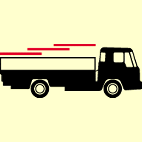 Right answer
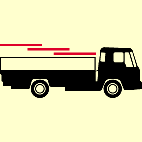
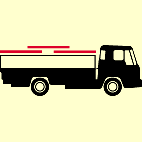
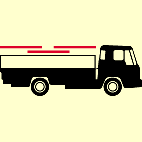
Keep a check in your mirrors as you're driving to make sure that the sheets are secure. Air can force itself under the sheets and work them loose.
You're covering a load using more than one sheet. Why should you start with the rearmost sheet, then work forwards?
- To stop you tripping when walking on the load
- To stop wind and rain from getting under the sheetsRight answer
- To make it much easier to fold up the sheets
- To make it easier to carry longer loads
If the load is sheeted incorrectly, the wind may get underneath a sheet, making it flap about. This is dangerous, as it can catch unsuspecting pedestrians or cyclists, and it can also seriously reduce the driver's view of what's happening behind.
What's the best knot to use when securing sheeting with ropes?
- A dolly knotRight answer
- A reef knot
- A slip knot
- A bowline knot
If sheeting is being secured with ropes, you must make sure it's tied down securely. The most effective method of tying is with 'dolly knots'. These are non-slip knots that hold firmly.
Why are straps unsuitable to tie down a load of scrap metal?
- Straps are hard to secure
- Straps will slip in rain
- Straps will damage the load
- Straps can wear and snapRight answer
When securing a load, the driver must use the most suitable type of restraint. Scrap metal is likely to have sharp edges that could wear through straps. Security of the load is the driver's responsibility; a load that has been correctly secured should not move if an emergency arises.
You're driving an open tipper lorry carrying loose dry sand. Why should you sheet this load?
- To stop the handling from being affected
- To stop the load from shifting
- To stop the load from blowing awayRight answer
- To stop the tipper mechanism from accidentally operating
If you're carrying a load that consists of loose materials, it must be covered by suitable sheeting. You must not risk losing any part of your load. This could cause damage or injury to other road users, and you would be responsible.
What should you do if the load on your lorry becomes insecure?
- Continue at a slower speed to make sure the load does not fall off
- Attach 'hazard' boards to the load to warn other road users
- Park and resecure the load before continuingRight answer
- Inform base at the earliest opportunity
If you become aware that any part of your load is insecure, you must stop as soon as it's safe to do so. Resecure the load before continuing your journey. If this is not possible, then you must seek assistance. Do not take risks.
Tankers carrying liquids can experience the 'wave effect'. What helps to reduce this problem?
- Spray guards
- Harsh braking
- Baffle platesRight answer
- Wind deflectors
Modern tankers are fitted with baffle plates inside the tank compartment. These help to minimise the movement of liquids and, therefore, reduce the 'wave effect'.