Attitude questions Car theory test
This topic has 38 practice questions. Here are 10 of them with the right answer and why.
What must you do when the amber light is flashing at a pelican crossing?
- Stop and wait for the green light
- Stop and wait for the red light
- Give way to pedestrians waiting to cross
- Give way to pedestrians already on the crossingRight answer
Pelican crossings are signal-controlled crossings operated by pedestrians. Push-button controls change the signals. Pelican crossings have no red-and-amber stage before green; instead, they have a flashing amber light. This means you must give way to pedestrians who are on the crossing but if the crossing is clear you can continue.
Why should you never wave people across at pedestrian crossings?
- Another vehicle may be comingRight answer
- They may not be looking
- It's safer for you to carry on
- They may not be ready to cross
If people are waiting to use a pedestrian crossing, slow down and be prepared to stop. Do not wave them across the road, because another driver may not have seen them, may not have seen your signal, and may not be able to stop safely.
Why is it dangerous to travel too close to the vehicle ahead?
- Your engine will overheat
- Your mirrors will need adjusting
- Your view of the road ahead will be restrictedRight answer
- Your sat nav will be confused
‘Tailgating’ is the term used when a driver or rider follows the vehicle in front too closely. It's dangerous because it restricts your view of the road ahead and leaves no safety margin if the vehicle in front needs to slow down or stop suddenly. Tailgating is often the underlying cause of rear-end collisions or multiple pile-ups.
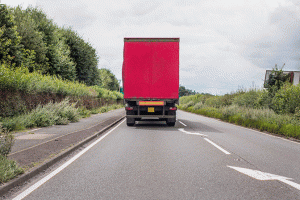
What will happen if you follow this vehicle too closely?
- Your brakes will overheat
- Your fuel consumption will be increased
- Your engine will overheat
- Your view ahead will be reducedRight answer
Staying back will increase your view of the road ahead. This will help you to see any hazards that might occur and give you more time to react.
What's the minimum time gap you should leave when following a vehicle on a wet road?
- One second
- Two seconds
- Three seconds
- Four secondsRight answer
Water will reduce your tyres' grip on the road. The safe separation gap of at least two seconds in dry conditions should be doubled, to at least four seconds, in wet weather.
You're being overtaken by a long, heavily laden lorry. What should you do if it's taking a long time for it to overtake?
- Speed up
- Slow downRight answer
- Hold your speed
- Change direction
A long lorry with a heavy load will need more time to pass you than a car, especially on an uphill stretch of road. Slow down and allow the lorry to pass.
Which vehicle will use a blue flashing beacon?
- Motorway maintenance
- Bomb disposalRight answer
- Snow plough
- Breakdown recovery
Emergency vehicles use blue flashing lights. If you see or hear one, move out of its way as soon as it's safe and legal to do so.
What should you do if you're being followed by an ambulance showing flashing blue lights?
- Pull over as soon as it's safe to do soRight answer
- Accelerate hard to get away from it
- Maintain your speed and course
- Brake harshly and stop well out into the road
Pull over in a place where the ambulance can pass safely. Check that there are no bollards or obstructions in the road that will prevent it from passing.
What type of emergency vehicle is fitted with a green flashing beacon?
- Fire engine
- Road gritter
- Ambulance
- Doctor's carRight answer
A green flashing beacon on a vehicle means the driver or passenger is a doctor on an emergency call. Give way to them if it's safe to do so. Be aware that the vehicle may be travelling quickly or may stop in a hurry.
Who should obey diamond-shaped traffic signs?

- Tram driversRight answer
- Bus drivers
- Lorry drivers
- Taxi drivers
These signs apply only to tram drivers, but you should know their meaning so that you\'re aware of the priorities and are able to anticipate the actions of the driver.