Rules of the road questions Car theory test
This topic has 67 practice questions. Here are 10 of them with the right answer and why.
What\'s the meaning of this sign?
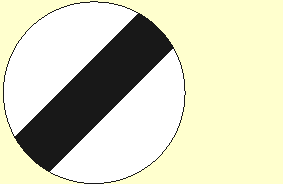
- Local speed limit applies
- No waiting on the carriageway
- National speed limit appliesRight answer
- No entry for vehicles
This sign does not tell you the speed limit in figures. You should know the speed limit for the type of road that you\'re on and the type of vehicle that you\'re driving or riding. Study your copy of The Highway Code.
What's the national speed limit for cars and motorcycles on a dual carriageway?
- 30 mph
- 50 mph
- 60 mph
- 70 mphRight answer
Make sure that you know the speed limit for the road that you're on. The speed limit on a dual carriageway or motorway is 70 mph for cars and motorcycles, unless signs indicate otherwise. The speed limits for different types of vehicle are listed in The Highway Code.
There are no speed-limit signs on the road. In England, Scotland and Northern Ireland how is a 30 mph limit generally indicated?
- By hazard warning lines
- By street lightingRight answer
- By pedestrian islands
- By double or single yellow lines
In England, Scotland and Northern Ireland, there's a 30 mph speed limit where there are street lights unless signs show another limit. In Wales street lights indicate the limit is 20 mph unless signs show otherwise.
In England, Scotland and Northern Ireland what will the speed limit usually be where you can see street lights but no speed-limit signs?
- 30 mphRight answer
- 40 mph
- 50 mph
- 60 mph
In England, Scotland and Northern Ireland the presence of street lights generally indicates that there's a 30 mph speed limit, unless signs tell you otherwise. In Wales street lights indicate a 20 mph limit unless signs show otherwise.
What does this sign mean?
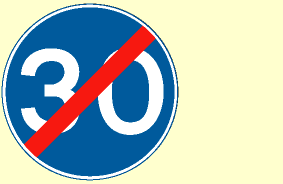
- Minimum speed 30 mph
- End of maximum speed
- End of minimum speedRight answer
- Maximum speed 30 mph
The red slash through the sign indicates that the restriction has ended. In this case, the restriction was a minimum speed limit of 30 mph.
What should you do if you want to overtake a tractor but are not sure that it's safe?
- Follow another vehicle as it overtakes the tractor
- Sound your horn to make the tractor driver pull over
- Speed past, flashing your lights at oncoming traffic
- Stay behind it if you're in any doubtRight answer
Following a tractor can be frustrating, but never overtake if you’re unsure whether it’s safe. Ask yourself: 'Can I see far enough down the road to make sure that I can complete the manoeuvre safely?' It's better to be delayed for a minute or two than to take a chance that may cause a collision.
Which vehicle is most likely to take an unusual course at a roundabout?
- Estate car
- Taxi
- Delivery van
- Long vehicleRight answer
Long vehicles might have to take a slightly different position when approaching the roundabout or going around it. This is to stop the rear of the vehicle cutting in and mounting the kerb.
When may you stop on a clearway?
- NeverRight answer
- When it's busy
- In the rush hour
- During daylight hours
Clearways are in place so that traffic can flow without the obstruction of parked vehicles. Just one parked vehicle can cause an obstruction for all other traffic. You must not stop where a clearway is in force, not even to pick up or set down passengers.
What\'s the meaning of this sign?
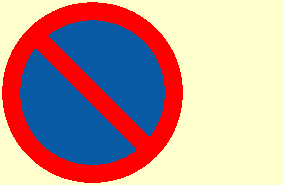
- No entry
- Waiting restrictionsRight answer
- National speed limit
- School crossing patrol
This sign indicates that there are waiting restrictions. It\'s normally accompanied by details of when the restrictions are in force. Details of most signs in common use are shown in The Highway Code. For more comprehensive coverage, see Know Your Traffic Signs.
You're looking for somewhere to park at night. When may you park on the right-hand side of the road?
- When you're in a one-way streetRight answer
- When you have your sidelights on
- When you're more than 10 metres (32 feet) from a junction
- When you're under a lamppost
Red rear reflectors show up when headlights shine on them. These are useful when you're parked at night, but they'll only reflect if you park in the same direction as the traffic flow. Normally you should park on the left, but in a one-way street you may also park on the right-hand side of the road.